
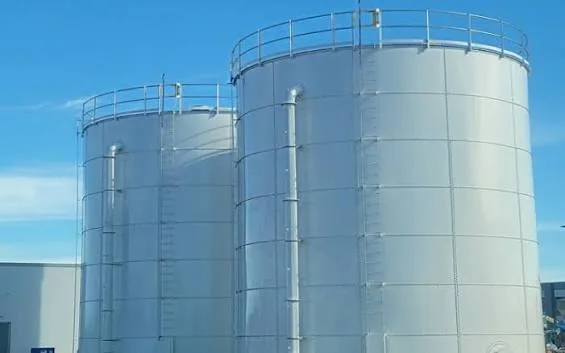
1. You Can See Sediment at the Bottom of the Tank
One of the clearest warning signs is visible sediment. Open the inspection hatch of your storage tank and you may find a layer of: Sand Soil Rust particles Organic matter Sludge Mineral deposits Other suspended material Some sediment may enter with the incoming water, particularly where the source is a borehole or another untreated supply. Over time, however, that material can accumulate at the bottom of the tank. When water levels change, pumps operate or water enters the tank at high velocity, the sediment can become disturbed and circulate through the water supply. This can increase turbidity and place additional pressure on downstream filters.
Why sediment matters
Sediment is not simply an aesthetic problem. Accumulated material can provide an environment where microorganisms and other contaminants may persist. It can also clog: Cartridge filters Pumps Valves Pipes Irrigation equipment Industrial equipment If your storage tank consistently accumulates sediment, investigate where it is coming from rather than repeatedly cleaning the tank without addressing the source.
2. The Tank Has a Bad Smell
Unusual odours are another warning sign. Water stored in a poorly maintained tank can develop unpleasant smells due to accumulated organic material, microbial growth or stagnant conditions. If water coming directly from your treatment system appears normal but develops an unusual smell after storage, the tank and distribution system should be investigated. This is especially important when water is being used for: Food processing Beverage production Hospitality Cleaning Pharmaceutical applications Domestic consumption Other processes where water quality is critical Do not assume that an unpleasant smell is simply a characteristic of the source water. The problem may be occurring after treatment.
3. The Water Looks Different After Storage
Water quality should be assessed at more than one point in the treatment process. For example, if water leaving your treatment system is clear but water sampled from the storage tank appears cloudy, coloured or contains particles, the storage stage deserves attention. Changes can result from: Sediment accumulation Corrosion Microbial growth Contamination entering through the tank opening Deteriorating tank materials Poorly maintained plumbing Mixing of treated and untreated water This is why water testing should not always be performed only at the treatment plant. If there is a storage tank between treatment and the point of use, sampling both sides of the tank can help identify where the problem is occurring.
4. The Tank Is Not Properly Covered
A storage tank should not be treated like an open container. A damaged, missing or poorly fitted cover can allow unwanted material to enter the tank. Depending on its location, this can include: Dust Soil Leaves Insects Bird droppings Rainwater Other environmental contaminants A tank located outdoors is particularly vulnerable if its cover, inspection hatch or ventilation openings are not properly protected. Even a small opening can become a pathway for contamination.
Check the tank today
Inspect: The main tank cover Inspection hatch Inlet Outlet Overflow pipe Drain Vent Surrounding area The tank should be protected while still allowing appropriate access for inspection and maintenance.
5. Algae Is Growing Inside the Tank
If sunlight can penetrate into a water storage tank, algae growth can become a problem. This is more likely with tanks that are damaged, translucent, poorly covered or exposed to excessive sunlight. Algae can affect: Water appearance Taste Odour Filter performance Overall water quality Once biological growth becomes established, simply adding more filtration downstream may not solve the underlying problem. The storage environment itself needs to be addressed.
6. Your Filters Are Becoming Dirty Much Faster
This is a warning sign that many businesses overlook. Suppose your water treatment system normally allows a cartridge filter to operate for several weeks before replacement. Suddenly, the filter becomes visibly dirty after only a few days. Don't immediately assume that the filter is defective. The storage tank may be introducing contaminants back into the water. A poorly maintained tank can release accumulated sediment and particles into the distribution system. The result is increased loading on downstream filtration. This can lead to: Dirty storage tank → increased particles → clogged filters → higher pressure drop → reduced water flow → increased maintenance costs If filter replacement frequency suddenly increases, investigate the entire water system — not just the filter.
7. Your Water Tests Are Changing After Storage
One of the most useful ways to identify storage-related contamination is through water testing. Test the water at different stages: Source water → Treatment system → Storage tank → Point of use This creates a basic picture of where water quality changes are occurring. Depending on the application, relevant parameters may include: pH Turbidity TDS Conductivity Hardness Iron Manganese Chlorine residual Microbiological parameters Other contaminants relevant to the water source and application For drinking water and sensitive industrial applications, microbiological testing is particularly important.
Why Storage Tanks Matter in Industrial Water Treatment
It is easy to think of water treatment as simply: Raw water → Filter → RO → Clean water In reality, many industrial systems are more complex: Water source → Pretreatment → Filtration → RO → Disinfection → Storage → Distribution → Point of use Every stage can affect final water quality. A perfectly functioning reverse osmosis system cannot guarantee that water remains at the same quality after it enters a poorly maintained storage tank. This is why storage should be included when designing or auditing an industrial water treatment system.
What Happens When Contaminated Water Reaches Your Production Process?
The consequences depend on how the water is being used. For some applications, contamination may result in an unpleasant taste or appearance. For industrial facilities, the consequences can be considerably more expensive. Poor-quality stored water can contribute to: Equipment fouling Clogged filters Scaling Corrosion Microbial problems Product quality issues Increased maintenance Higher chemical consumption Production interruptions In food and beverage manufacturing, water quality can directly affect hygiene and product quality. In pharmaceutical applications, water quality requirements can be significantly more stringent. In industrial processes, poor-quality water can damage equipment or interfere with production. The cost of preventing contamination is usually much lower than dealing with its consequences.
How to Keep Your Water Storage Tank Clean
1. Inspect the tank regularly Check the physical condition of the tank, fittings, cover, overflow, inlet and outlet. Look for sediment, cracks, corrosion and signs of contamination. 2. Keep the tank properly covered Make sure the cover is secure and that openings are appropriately protected. Prevent insects, debris, animals and environmental contaminants from entering. 3. Clean the tank periodically The tank should be drained, inspected and cleaned according to an appropriate maintenance schedule. The exact cleaning procedure should be suitable for the tank material and intended water use. 4. Test water at multiple points Don't test only the incoming source water. Where appropriate, compare: Source → Treated water → Stored water → Point of use This helps identify whether contamination is occurring during storage. 5. Protect the surrounding area Keep chemicals, waste, fuel and other potential contaminants away from the tank. Also ensure that drainage around the tank does not create a contamination risk. 6. Maintain downstream filtration Even with good tank management, filtration may still be necessary before water reaches sensitive processes. The appropriate filtration system depends on the water quality and intended application.
Don't Forget the Pipes After the Tank
The storage tank isn't necessarily the final source of contamination. Water can also deteriorate as it travels through the distribution network. Inspect: Pipes Valves Pumps Pressure vessels Filters Taps Dead ends Unused pipe sections If treated water is clean at the tank but contaminated at the point of use, the distribution system may be responsible. This is particularly important in large factories and commercial buildings with extensive pipe networks.
When Should You Investigate Your Water Storage System?
Consider a professional water treatment assessment if you notice: Recurring sediment Bad smells Cloudy water Changing water test results Frequent filter blockages Algae growth Unexplained changes in TDS or conductivity Microbiological contamination Unusual colour Tank leaks Corrosion Damaged covers Increasing water treatment costs A proper assessment should look at the entire water system, rather than focusing on the storage tank alone.
Need Help With Industrial Water Treatment?
Continue The Conversation
contact us
contact us
Request a QuoteIf your facility is experiencing recurring water quality problems, don't automatically assume that the treatment equipment is the problem. The issue could be the source water, pretreatment, storage tank, distribution system or point of use. Vortexus Industrial provides water treatment solutions for industrial and commercial applications, including filtration and reverse osmosis systems. Explore Vortexus Industrial's water treatment solutions and assess your complete water treatment setup before a small storage problem becomes an expensive operational issue.