
Why the Cheapest Pump Can Become the Most Expensive
A pump does not simply cost money when you buy it. It continues to cost money every time it operates. Your actual pump cost can include: Purchase price Installation Electricity Maintenance Spare parts Downtime Repairs Replacement Labour Production losses Water-treatment inefficiencies This is why industrial procurement teams should look beyond the initial price. A pump that costs less but consumes more electricity and fails frequently can be significantly more expensive than a higher-quality pump that operates reliably for years. This is known as total cost of ownership.
1. Cheap Pumps Can Consume More Energy
Energy consumption is one of the biggest hidden costs of pumping. A pump may operate for several hours every day—or continuously in some industrial applications. Even a small difference in efficiency can therefore become significant over time. Consider a facility running a water pump every day. The pump may be responsible for: Water transfer → Process circulation → Filtration → Pressure boosting → Treatment operations If the pump is inefficient, the facility continues paying for that inefficiency every hour it operates. The initial saving on the purchase price can quickly disappear through higher electricity bills. This is why pump selection should consider the required flow rate, head, motor power, efficiency, and operating conditions rather than price alone.
2. The Wrong Pump Can Damage Your System
Not every pump is suitable for every application. A pump must be selected according to the actual hydraulic duty. Important considerations include: Required flow rate Required head Fluid type Fluid temperature Fluid characteristics Pressure Pipework Power supply Installation configuration Material compatibility Operating schedule For example, a pump designed for clean-water transfer may not be appropriate for a chemically aggressive fluid or a demanding process application. Similarly, a pump selected purely because its horsepower looks impressive may not operate efficiently at your actual duty point. The right question is not: "How powerful is the pump?" It is: "Can this pump reliably deliver the required flow at the required head under our actual operating conditions?"
3. Oversizing a Pump Can Also Cost You
Many buyers assume that a larger pump automatically provides better performance. It doesn't. An oversized pump can create its own problems. If the pump produces significantly more flow or pressure than the system requires, you may experience: Higher energy consumption Increased system pressure Unnecessary wear Poor operating efficiency Increased maintenance Potential problems with downstream equipment The objective should be to select the pump around the actual duty point. A properly sized pump can be more economical and more reliable than simply installing the largest available model.
4. Undersizing Can Be Just as Expensive
The opposite problem is choosing a pump that is too small. An undersized pump may struggle to achieve the required flow or pressure. This can lead to: Poor water circulation Insufficient pressure Longer operating times Reduced process performance Frequent overloading Premature equipment failure In a water treatment plant, for example, inadequate pumping can affect other parts of the treatment process. A pump does not operate in isolation. It is part of a larger system.
5. Frequent Breakdowns Have a Cost Beyond the Spare Part
Imagine a factory where a critical process-water pump fails. The replacement cost may be manageable. But what about the production line that stops while the pump is being repaired? What about the technicians? What about delayed orders? What about wasted raw materials? What about customers waiting for deliveries? What about emergency procurement? The true cost of pump failure can therefore be many times higher than the cost of the pump itself. For critical industrial applications, reliability is an economic decision—not simply an engineering preference.
6. Spare Parts Matter
Before purchasing a pump, ask a simple question: What happens when this pump needs a replacement part? You should consider the availability of: Mechanical seals Bearings Impellers Couplings Gaskets Motors Electrical components Pump accessories A pump can become a procurement nightmare if basic replacement components are difficult to source. For businesses operating critical water systems, access to replacement parts and technical support can be just as important as the original pump price.
7. A Cheap Pump May Not Match Your Water
The fluid being pumped matters. Water is not always simply "water." Industrial applications can involve: Clean water Process water Treated water Borehole water Chemical solutions Hot water Cooling water Wastewater Corrosive fluids Material selection is therefore important. Depending on the application, components may require appropriate materials such as stainless steel or other compatible materials. For example, Vortexus currently lists CNP stainless-steel centrifugal and multistage pump options in its catalogue, including models using stainless-steel construction for applications such as clean-water transfer, pressure boosting, and industrial circulation.
CNP Pumps for Industrial Water Applications
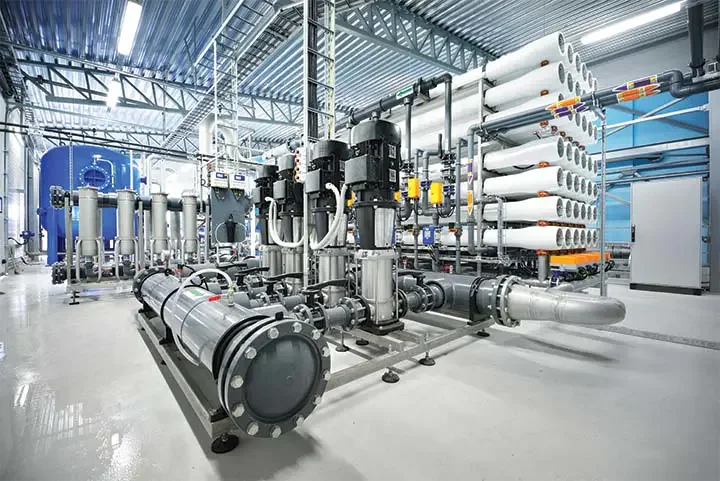
One of the pump ranges available through Vortexus Industrial is CNP, with multiple configurations suited to different water-handling requirements. The current Vortexus catalogue includes: CNP vertical inline centrifugal pumps CNP end-suction centrifugal pumps CNP vertical multistage centrifugal pumps CNP stainless-steel horizontal centrifugal pumps CNP stainless-steel multistage options These pump configurations can be used for applications including water transfer, pressure boosting, circulation, filtration plants, RO systems, and industrial water systems, depending on the specific model and duty requirements. For example, vertical multistage pumps can be useful where higher pressure is required within applications such as water boosting, RO systems, and filtration systems. But the important point is this: The model should be selected based on the application not simply because it is available.
Vertical Multistage Pumps: When Higher Pressure Matters
Vertical multistage centrifugal pumps use multiple impeller stages to achieve higher pressure than many single-stage arrangements. They can be considered for applications such as: Pressure boosting Reverse osmosis systems Filtration plants Industrial water supply High-pressure water circulation Process-water applications However, the correct model still depends on the required flow, head, fluid, power supply, and system configuration. A high-pressure pump that is incorrectly selected can be just as problematic as an underpowered pump.
End-Suction Centrifugal Pumps for High-Flow Applications
End-suction centrifugal pumps are widely used in water-transfer and circulation applications. They can be suitable for applications where relatively high flow is required, depending on the specific model and duty. Vortexus currently lists CNP cast-iron end-suction centrifugal pump options intended for high-flow water transfer, pressure boosting, and industrial circulation. These pumps can form part of systems such as: Storage tank → Pump → Filtration → Process → Return or: Borehole/Water source → Storage → Pump → Distribution The exact configuration depends on the facility's hydraulic requirements.
Stainless Steel Pumps: When Material Selection Matters
In water treatment and industrial environments, pump construction can be important. Stainless-steel pumps can offer advantages in applications where material compatibility, cleanliness, and corrosion resistance are important considerations. Vortexus lists CNP stainless-steel pump options, including stainless-steel horizontal centrifugal pumps and stainless-steel multistage models. However, stainless steel should not automatically be interpreted as suitable for every chemical or process. The actual fluid chemistry should always be considered when selecting materials.
How to Avoid Buying the Wrong Industrial Pump
Before requesting a quotation, prepare as much technical information as possible. Provide: 1. Required flow rate For example, m³/h. 2. Required head For example, metres of head. 3. Fluid State exactly what is being pumped. 4. Temperature Especially important for non-ambient applications. 5. Power supply Voltage, phase, and frequency. 6. Pipe size Include suction and discharge information where available. 7. Application Explain whether the pump is for water transfer, RO, filtration, pressure boosting, circulation, irrigation, or another process. 8. Existing pump information If replacing an existing pump, provide the old pump's nameplate or model number. This information allows suppliers to recommend equipment based on engineering requirements rather than guesswork.
Before You Buy Your Next Industrial Pump
Ask yourself these seven questions: 1. What is my required flow? Don't guess. 2. What is my required head? Don't select based on horsepower alone. 3. What fluid am I pumping? Water chemistry and fluid characteristics matter. 4. How many hours will the pump operate? Operating hours directly affect lifecycle cost. 5. What will electricity cost over its operating life? Energy can become a major part of pump ownership cost. 6. What spare parts will I need? Availability matters when the pump is critical. 7. What happens if it fails? If the answer is "the entire operation stops," reliability and redundancy deserve serious consideration.