
For businesses looking to buy flocculants in Kenya, the right product should be selected according to the water quality, treatment objective and existing treatment system. Reesolmart supplies coagulants and flocculants for water and wastewater-treatment applications through its dedicated catalogue. For complete water-treatment systems, RO plants, pumps, filtration and industrial equipment, businesses can also explore Vortexus Industrial.
What Is a Flocculant?
A flocculant is a water-treatment chemical that helps suspended particles combine into larger particles called flocs. Very fine particles can remain suspended in water because they are too small or electrically stable to settle naturally. Flocculation helps create larger aggregates that can be separated more easily. Flocculants are commonly used in: Drinking-water treatment Borehole-water clarification Industrial wastewater treatment Sewage treatment Sludge dewatering Surface-water treatment Mining and process-water treatment Swimming-pool clarification The exact chemical and dosage depend on the characteristics of the water.
Flocculant Price in Kenya
f you're searching for flocculant price in Kenya, avoid comparing products purely by the price per kilogram or container. The actual cost of treatment can depend on: Chemical concentration Product formulation Packaging Dosage Water turbidity Suspended solids concentration Treatment flow rate Required water quality Quantity purchased Application A product with a higher purchase price can sometimes have a lower overall treatment cost if it achieves effective clarification at a lower dosage.
flocculant chemicals in Kenya
1. Polyaluminium Chloride (PAC) – Coagulant for Water Treatment
Polyaluminium chloride (PAC) is one of the key coagulants used in water and wastewater treatment.
PAC is commonly used for:
Drinking-water treatment
Borehole-water clarification
Surface-water treatment
Industrial wastewater
Sewage treatment
Process-water clarification
PAC works by destabilising suspended and colloidal particles, allowing them to combine into larger flocs.
PAC features
When comparing PAC products, buyers should look at:
Aluminium content
Basicity
Physical form
Concentration
pH range
Application
Packaging
Required dosage
2. Aluminium Sulphate — Alum
Aluminium sulphate, commonly known as alum, is another established coagulant for water clarification. It can be used where suspended particles need to be destabilised before settling or filtration. Common applications Municipal water treatment Borehole-water clarification Surface-water treatment Industrial water treatment Wastewater treatment Process-water clarification Advantages Widely used Effective for many clarification applications Can be combined with flocculation Suitable for sedimentation systems The correct dose depends on the water characteristics.
3. Polymer Flocculants
Polymer flocculants are particularly useful when fine particles need to form larger, stronger flocs. Depending on the application, polymers can be: Anionic Cationic Non-ionic Polymer flocculant applications They are commonly considered for: Industrial wastewater Sewage treatment Sludge dewatering Mining wastewater Process-water treatment Clarification Solid-liquid separation The correct polymer cannot be selected from the product name alone. Water chemistry and jar testing matter.
4. Flocculants for Industrial Wastewater Treatment
Industrial wastewater can contain: Suspended solids Colloidal particles Oils Organic matter Metals Colour Fine solids A chemical-treatment stage may look like: Coagulant → Flocculant → Clarifier → Filtration → Further treatment The exact treatment train depends on the wastewater. Why the right flocculant matters The wrong chemical can cause: Weak flocs Slow settling Excess chemical consumption Poor water clarity Excess sludge Increased filtration load For industrial plants, testing the chemical before large-scale procurement can save significant operating costs.
5. Flocculants for Sludge Dewatering
Flocculants are also important in sludge dewatering. Sludge from wastewater treatment contains large quantities of water. Polymer flocculants can help bind fine solids together so water can be separated more effectively. Applications include: Industrial wastewater plants Sewage-treatment plants Manufacturing facilities Food-processing plants Municipal wastewater Process-water treatment The ideal polymer depends on the sludge characteristics and dewatering equipment.
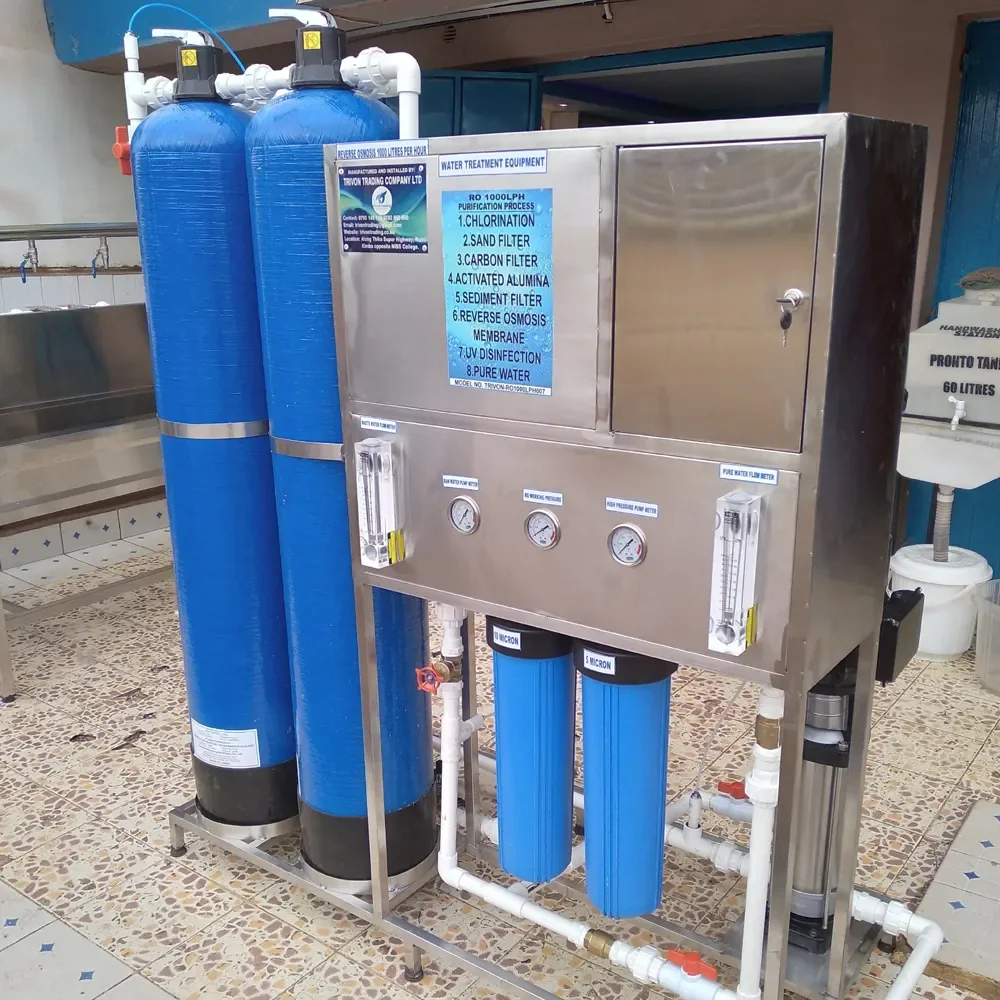
One of the most valuable applications for coagulants and flocculants is RO pretreatment. An RO membrane should not be expected to handle excessive suspended solids and colloidal material without appropriate pretreatment. A possible treatment sequence is: Raw Water → Coagulation → Flocculation → Clarification → Sand Filtration → Cartridge Filtration → RO The exact configuration depends on the water analysis. Vortexus RO Equipment Once the water has been adequately pretreated, the RO stage can use an appropriate membrane and plant configuration. Vortexus Industrial currently lists a dedicated Reverse Osmosis Systems category with RO plants, membranes, controllers and accessories. Products listed include: RO SKID 8000LPH 6000LPH RO System FRP SKID 1354 DuPont FilmTec SW30-2540 FilmTec BW30 PRO-4040 Hidrotek BW-4040 membranes Vontron BW/LP 4040 Keensen BW 4040 👉 View Vortexus RO Systems & Membranes This gives the Reesolmart article a highly relevant backlink: flocculant → RO pretreatment → RO membrane → Vortexus RO system
7. Flocculant + RO Antiscalant: What Is the Difference?
These chemicals solve different problems. Flocculant Targets: Suspended and colloidal particles RO antiscalant Targets: Mineral scaling risk on RO membranes For example, RO systems can experience scaling associated with substances such as calcium carbonate, calcium sulphate, barium sulphate and silica. Vortexus's catalogue currently includes Antiscallant High Silica 5kg and Antiscallant Low Silica 5kg under Scale Inhibitors. It also lists Genesys SI 25L and Genesys LF 25L as scale inhibitors. 👉 View Vortexus Scale Inhibitors & Antiscalants So if your problem is turbidity and suspended solids, investigate coagulation/flocculation. If the problem is mineral scaling inside an RO system, investigate the appropriate antiscalant programme.
8. Flocculation and Filtration
Flocculation is often followed by filtration. The objective is to create particles large enough for the downstream separation process to remove them effectively. A treatment system may therefore combine: Chemical treatment PAC / Alum / Polymer ↓ Flocculation Large, settleable flocs ↓ Clarification Settling or flotation ↓ Filtration Sand / multimedia / cartridge filtration ↓ RO Membrane separation Vortexus Industrial's catalogue includes sand media products, RO systems, membranes and filtration-related equipment, making it relevant when a chemical supplier is discussing the complete treatment process.
9. Dosing Equipment for Flocculants
Getting the chemical right is only half the job. The chemical must also be dosed consistently. A treatment plant may require equipment for: Chemical dosing Water transfer Pressure boosting Filtration RO feed Process circulation Vortexus Industrial lists several CNP pumps. One example is the CNP Vertical Multistage Centrifugal Pump, which is described for water boosting, RO systems, filtration plants and industrial applications. 👉 View CNP Pumps for Water Treatment & RO Applications This is another strong contextual backlink because it connects: flocculant dosing → water treatment → pumps → RO rather than inserting an unrelated company link.
10. Flocculant Selection for Borehole Water
Borehole water varies significantly from one location to another. A borehole may have: High turbidity Iron Manganese Hardness High TDS Suspended solids Other dissolved contaminants Flocculation can help with suspended and colloidal material, but it will not solve every water-quality problem. For example: High TDS → RO may be required Hardness → softening may be required Microbial contamination → disinfection may be required RO scaling → appropriate scale-control strategy may be required This is why water analysis should come before chemical selection.
11. Flocculant vs RO Membrane Cleaning Chemical
Don't confuse pretreatment chemicals with membrane-cleaning chemicals. Flocculant Used before or during clarification to help suspended particles form larger flocs. CIP chemical Used to clean an existing fouled RO membrane. Vortexus's current catalogue includes RO membranes and complete RO systems, including FilmTec, Hidrotek, Vontron and Keensen membrane products. 👉 Compare Vortexus RO Membranes This is particularly relevant when an article discusses protecting the RO membrane through proper pretreatment.
Frequently Asked Questions
What is the price of flocculant in Kenya? The price depends on the type of flocculant, formulation, concentration, packaging, dosage and quantity purchased. For industrial buyers, compare the total chemical cost per cubic metre treated. What is the best flocculant in Kenya? There is no universal best flocculant. The correct product depends on water chemistry, suspended solids, treatment equipment and the desired treatment result. Where can I buy flocculant in Kenya? Reesolmart is a source for water-treatment chemicals, including coagulants and flocculants. Product selection should be based on the intended application and water characteristics. What is PAC used for? PAC is an inorganic coagulant used to destabilise suspended and colloidal particles so they can form larger flocs for separation. Can flocculant be used before an RO system? Yes. Coagulation and flocculation can be used as part of RO pretreatment when suspended and colloidal material needs to be reduced before membrane treatment. What is the difference between PAC and polymer flocculant? PAC is primarily an inorganic coagulant, while polymer flocculants are used to promote the formation of larger, stronger flocs. In many treatment systems they can work together. Can flocculant remove TDS? No. Flocculation primarily targets suspended and colloidal material. Dissolved salts require different treatment processes. What equipment is needed after flocculation? Depending on the treatment plant, downstream equipment can include clarifiers, sand filters, cartridge filters, pumps, dosing systems and potentially RO systems.
Where to Buy Flocculants and Water-Treatment Equipment in Kenya
If you're searching for flocculant price in Kenya, start with the actual treatment requirement. For coagulants and flocculants, Reesolmart is the relevant chemical source. For the equipment that can form part of the wider treatment system, Vortexus Industrial has a catalogue covering filtration systems, RO systems, pumps, membranes, chemicals and instrumentation. Relevant Vortexus products to explore RO systems: RO SKID 8000LPH, 6000LPH RO System and other RO plants RO membranes: FilmTec, Hidrotek, Vontron and Keensen membranes Pumps: CNP Vertical Multistage and other industrial pumps Scale control: Vortexus antiscalants and scale inhibitors Filtration: Vortexus sand media and filtration products
Final Verdict
The best flocculant in Kenya isn't necessarily the product with the lowest price. The correct choice depends on: Water quality → treatment objective → jar test → dosage → equipment → total treatment cost. For businesses sourcing coagulants and flocculants, Reesolmart provides the chemical side of the treatment requirement. For businesses that need the RO plant, membranes, pumps, filtration or supporting industrial equipment, Vortexus Industrial provides relevant products, including RO SKID 8000LPH, 6000LPH RO System, FilmTec membranes, Vontron membranes, CNP pumps and filtration media.