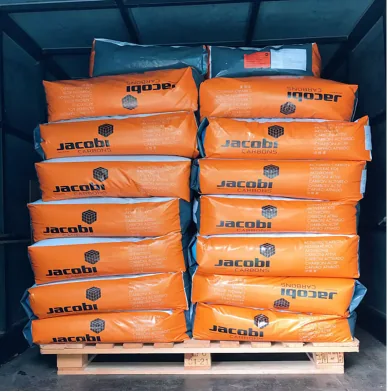
Jacobi Activated Carbon Price in Kenya — Quick AnswerIf you are searching for Jacobi activated carbon price in Kenya, a 25 kg bag can vary significantly depending on the Jacobi grade and application.Vortexus industrial and Reesolmart have the most pocket friendly price for Jacobi activated carbon in Kenya ,uganda ,Tanzania ,rwanda and south sudan
Jacobi's AquaSorb range covers applications
Drinking-water treatment Industrial process water Wastewater Beverage processing Home water filtration Swimming-pool filtration The range includes granular, powdered and other specialised carbon grades. This makes Jacobi carbon in Kenya particularly relevant for water-treatment companies, hotels, factories, bottled-water plants and commercial filtration systems.
Jacobi AquaSorb: Which Grade Do You Need?
Jacobi's AquaSorb family contains different grades. According to Jacobi, its range includes: AquaSorb rangeGeneral application100 SeriesWastewater and organic-compound removal1000 SeriesPotable-water applications5000 SeriesLarger molecular-weight organics and colour6000 SeriesLow-to-medium molecular-weight compoundsC SeriesTrace-level organics and specialised applicationsH SeriesHigh-purity applicationsL SeriesSilver-impregnated carbon for home filtersMP / CB SeriesPowdered carbon for taste, odour and pesticide removal Jacobi states that relevant AquaSorb grades comply with standards including NSF, EN and AWWA, depending on the grade and application
1. Jacobi AquaSorb for Drinking Water
Activated carbon is commonly used as part of drinking-water treatment to reduce certain organic contaminants, taste and odour compounds and other unwanted substances. Jacobi's AquaSorb range is used for drinking-water purification and can target: Taste and odour Pesticides Organic matter Disinfection by-product precursors VOCs Micropollutants Certain pharmaceutical and personal-care compounds Jacobi specifically describes AquaSorb products for municipal drinking-water purification. Important Activated carbon is not a universal replacement for disinfection. A complete drinking-water system may require several treatment stages depending on the raw-water analysis.
2. Jacobi Activated Carbon for Borehole Water
Borehole water can have problems including: Chlorine after disinfection Taste and odour Organic contaminants Certain pesticides Iron-related issues Manganese Hardness High TDS Activated carbon can help with certain organic compounds, chlorine-related contaminants, taste and odour, but it does not remove every dissolved mineral. For example: High TDS → RO may be required Hardness → softener may be required Bacteria → disinfection may be required Organic contaminants → activated carbon may be appropriate This is why water analysis should come before selecting a carbon grade.
3. Jacobi Activated Carbon for Chlorine Removal
One of the major applications of activated carbon in water filtration is dechlorination. Carbon can be used to reduce residual chlorine before sensitive downstream treatment equipment. This can be especially relevant in systems containing: Chlorinated water → Carbon filter → RO because RO membranes can be sensitive to oxidising agents. Jacobi describes AquaSorb products for dechlorination and the removal of chlorine-related compounds in point-of-use filtration applications.
4. Jacobi Carbon for RO Pretreatment
Activated carbon can form part of the pretreatment stage before reverse osmosis. A typical treatment process could be: Raw Water ↓ Sediment Filtration ↓ Activated Carbon ↓ Cartridge Filtration ↓ Antiscalant Dosing ↓ High-Pressure Pump ↓ RO Membrane The exact configuration depends on the water analysis. Why carbon before RO? Depending on the selected carbon grade and application, it may help reduce: Chlorine Taste and odour compounds Certain organic contaminants This can protect downstream treatment processes. For businesses purchasing the wider RO system, Vortexus Industrial also lists RO systems and membranes. 👉 View Vortexus RO Systems & Membranes
5. Jacobi Activated Carbon for Wastewater Treatment
Jacobi's AquaSorb range is also used in industrial wastewater treatment and reuse. Jacobi states that its carbon solutions can address contaminants including: COD-related organics BTEX Phenols Colours AOX Pesticides Surfactants Other chemicals Jacobi also describes laboratory testing and pilot equipment as part of selecting the appropriate carbon grade for individual wastewater applications. This is particularly important for factories. Don't select carbon solely because it is labelled "activated carbon." Different wastewater streams require different adsorption characteristics.
6. Jacobi CP2 Activated Carbon 25kg
One of the commercially searchable products in Kenya is: Jacobi Activated Carbon CP2 — 25kg Indicative listed price: approximately KSh 20,431 + VAT. The product listing describes powdered activated-carbon applications including wastewater treatment and removal of persistent organic compounds. CP2 can therefore be relevant when looking for: Powdered activated carbon Wastewater treatment Organic-contaminant adsorption Industrial water-treatment applications The dosage should be established through treatment testing rather than guessing from the bag size.
Jacobi Carbon for Swimming Pools
Activated carbon can also be incorporated into swimming-pool filtration systems. Jacobi states that its AquaSorb range can be used to reduce: Excess chlorine or ozone Low-molecular-weight organics THMs Chloramines Taste and odour compounds in appropriate pool-filtration applications. 👉 Explore Vortexus Industrial Water-Treatment Products This can be relevant for hotels, swimming pools, leisure facilities and commercial filtration projects.
Jacobi Carbon for Beverage Processing
Activated carbon is also used in beverage-related water treatment and processing. Jacobi describes AquaSorb and ColorSorb applications for brewing, bottling and soft drinks, including reduction of: Chlorine THMs Organic contaminants Chloramine Taste and odour Certain trace undesirable compounds Jacobi also offers powdered and granular forms for beverage producers. For food and beverage applications, however, the exact grade and applicable certification should be confirmed before purchase.
Granular vs Powdered Activated Carbon
This is one of the most important buying decisions. Granular Activated Carbon — GAC GAC consists of larger carbon particles and is commonly loaded into filter vessels. Typical configuration: Water → Carbon vessel → Treated water Advantages can include: Reusable filter-bed configuration Continuous treatment Easier separation from treated water Suitable for larger filtration systems Powdered Activated Carbon — PAC PAC consists of much finer particles. It can be dosed directly into a treatment process and subsequently separated with the solids/sludge process. Jacobi lists both granular and powdered AquaSorb products.
How Long Does Jacobi Activated Carbon Last?
There is no universal replacement interval. Carbon life depends on: Contaminant concentration Flow rate Carbon volume Empty-bed contact time Water temperature Organic loading Chlorine concentration Carbon grade Treatment objective A carbon bed that treats relatively clean water may last much longer than one treating heavily contaminated industrial water. Signs that carbon may need replacement Depending on the application: Chlorine breakthrough Taste and odour returning Organic contaminants appearing downstream Reduced treatment performance Increased pressure drop For industrial systems, monitoring is better than replacing carbon on an arbitrary calendar schedule.
How Much Jacobi Carbon Do You Need?
Don't buy based solely on the size of the water-treatment plant. A proper carbon-system design considers: Flow rate Example: 10 m³/h Carbon volume Determined from the treatment requirement and design parameters. Contact time Important for adsorption performance. Contaminant concentration Higher contaminant loading can consume carbon capacity faster. Treatment objective Dechlorination is different from advanced organic-contaminant removal.
Jacobi Carbon + Filtration Equipment
Activated carbon works as part of a treatment system. A typical commercial installation could include: Raw water pump ↓ Multimedia filter ↓ Activated carbon filter ↓ Cartridge filter ↓ Antiscalant ↓ RO ↓ Treated water Vortexus Industrial supplies equipment relevant to several of these stages, including CNP pumps, RO systems, membranes and water-treatment products. 👉 View Vortexus CNP Pumps 👉 View Vortexus RO Systems This makes the carbon purchase part of a complete treatment-system discussion rather than an isolated chemical purchase.
Frequently Asked Questions
How much is Jacobi activated carbon in Kenya? Current public Kenyan listings show approximately KSh 20,431 + VAT for some 25 kg AquaSorb/CP2 products, while other 25 kg listings are around KSh 25,000–41,160. The exact price depends on the grade and supplier. What is Jacobi AquaSorb used for? AquaSorb is Jacobi's activated-carbon range for applications including drinking water, wastewater, industrial process water, beverage processing and home water filtration. Does Jacobi activated carbon remove chlorine? Appropriate AquaSorb grades can be used for dechlorination and chlorine-related contaminant reduction. Can Jacobi carbon be used before RO? Yes, appropriate activated-carbon grades can form part of RO pretreatment, particularly where chlorine or certain organic contaminants need to be reduced. Does activated carbon remove TDS? No. Activated carbon is primarily an adsorption medium. It should not be treated as a replacement for RO when the objective is dissolved-salt/TDS reduction. Is Jacobi GoldSorb used for water treatment? GoldSorb is primarily a precious-metals recovery carbon range. For water treatment, Jacobi's AquaSorb range is the relevant family.